U.S. machine builders & integrators

Your next
product line.

Build a local laser machine business around the capabilities you already have.

FabPact connects local manufacturing, engineering and service with the specialist components and practical support a project needs. Begin with a capability review and a clearly scoped first machine.

Discuss your opportunity
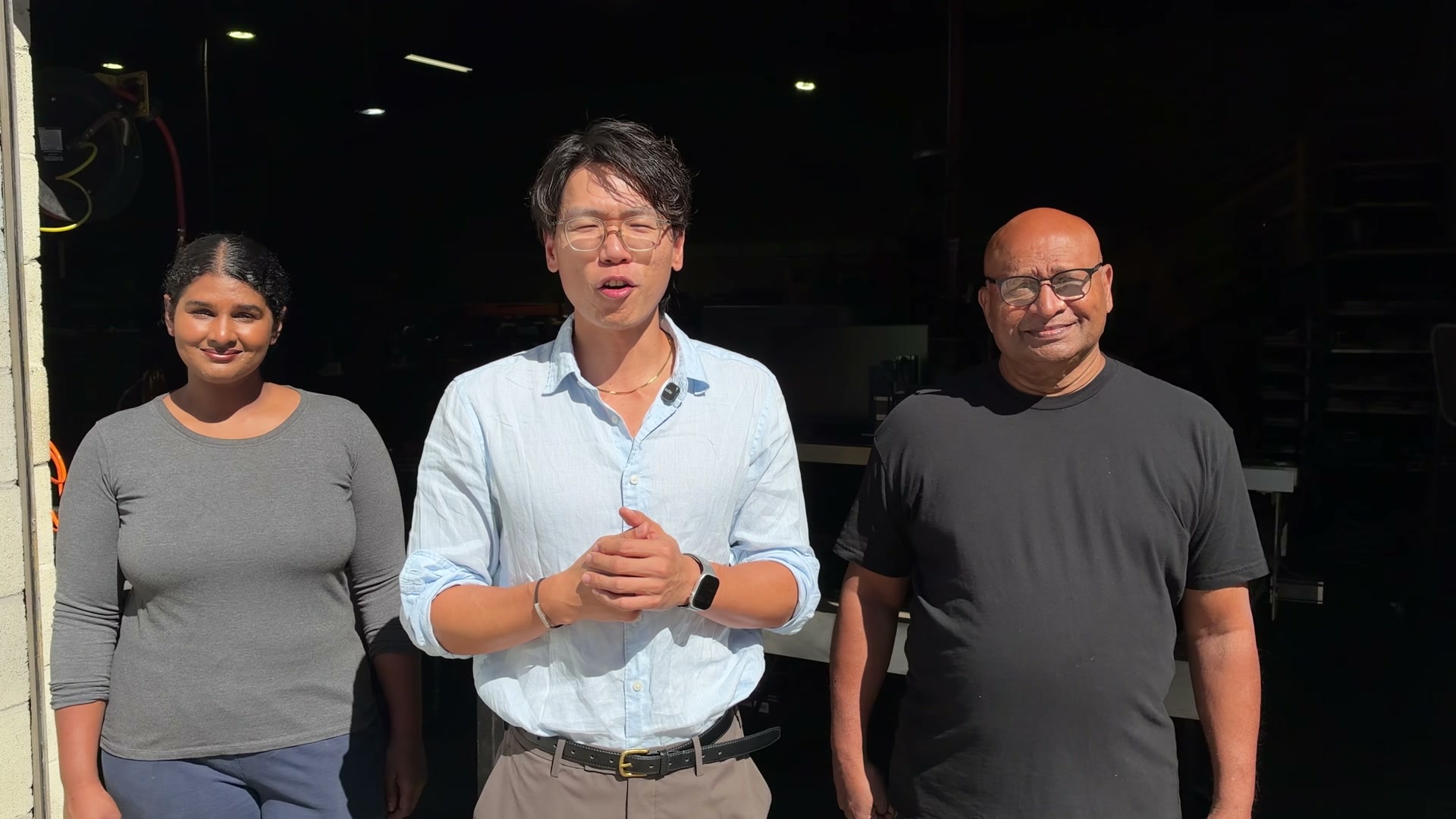
Lawson, Tiara and Xiaodong discussing machine building at the Pilco workshop
Pilco workshop visit · Documented Sky Fire conversation · Watch the project story ↗
Who we work with

A starting point
for your business.

01 / Equipment manufacturers

Add laser to what you build.

For teams already making CNC, plasma, forming or other metalworking equipment. Review the mechanical, electrical, manufacturing and inspection capabilities that can carry into a laser product line.

Bring: your current machines, workshop processes, engineering resources and the customer application you want to serve.

Discuss a product line ↗
02 / Distributors & dealers

Develop local integration.

For businesses with customer relationships and equipment sales or service experience. Start with a reviewed machine platform or explore local assembly as your technical team develops.

Bring: your customer base, service coverage, technical team and intended role in commissioning and support.

Discuss your next step ↗
03 / Engineering & service teams

Build on your technical skills.

For automation integrators, retrofit specialists and industrial service teams. Match the laser application to your existing mechanical, electrical, control and field-service capabilities.

Bring: a target application, example projects, integration interfaces and the support your team would need.

Discuss an integration project ↗

Building equipment for your own facility or starting a new venture? Share your application and resources so we can assess a suitable scope.

Three supply routes

Choose the work
you want to own.

01

Components & integration kits

For teams ready to take responsibility for a defined build. Review compatibility, documentation, missing parts and the engineering work before ordering.

Explore kits at AlleriaStore ↗
02

Complete & own-brand machines

For a first machine or an own-brand product platform. Confirm configuration, delivery state and the local reassembly, commissioning and service tasks.

Explore the NEW FIT starting platform ↗
03

Local integration & manufacturing

For developing repeatable local capability. Define which parts are supplied, assembled or manufactured locally and how the finished machine will be tested.

Explore the four-stage roadmap ↗
Make the business case

Compare the
whole project.

Local integration is not automatically cheaper or more profitable. Compare real quotations and your own operating assumptions before choosing a route.

Questions to resolve for the intended machine and market
ReviewComplete-machine supplyLocal integration
Equipment & logisticsConfiguration, packing, shipping, import costs and local reassembly.Components and kit scope, local parts, shipping and import costs for each supply.
People & facilitiesSpace, unloading, utilities, commissioning and operator training.Engineering, assembly labor, suppliers, tools, workshop capacity and training.
Quality & acceptanceFactory checks, transport condition and site acceptance tests.Incoming inspection, local process controls, integration tests and site acceptance.
Safety & market requirementsReview the configured machine and the responsibilities of supplier, importer and operator.Assign design, guarding, documentation and verification responsibilities across the project.
Service & working capitalWarranty terms, spare parts, response arrangements and machine inventory.Field service, parts stock, work in progress, rework and ongoing engineering support.

A financial estimate needs actual costs, labor assumptions, achievable sales and service obligations. No fixed savings, output or return is promised.

Discuss your project assumptions ↗
How a project takes shape

One clear pilot.
A basis to build on.

  1. 01

    Assess the opportunity

    Clarify the application, customers, current business and local capabilities. Identify missing information before selecting a machine.

  2. 02

    Define the scope

    Agree the target machine, supplied systems, local work, engineering inputs, budget assumptions and acceptance criteria.

  3. 03

    Plan supply & integration

    Review the parts list, interfaces, drawings, sourcing, documentation, workshop readiness and delivery responsibilities.

  4. 04

    Build, test & review

    Carry out the agreed assembly and commissioning. Record tests, defects, changes and responsibilities before accepting the pilot.

  5. 05

    Decide how to repeat

    Use pilot evidence to review costs, training, spares, service and process consistency before expanding the next build.

This is a project workflow. The separate four-stage roadmap describes how much capability you choose to develop; progressing through every stage is not required.

Before the first conversation

Practical questions.

Do we need to own every manufacturing process?

No. Review which processes your own workshop can handle and which capable local suppliers can provide. The drawings, inspection and responsibility for each part still need to be defined.

Can we begin with our own brand?

An own-brand machine platform can be a starting point. Configuration, appearance, delivery condition, commissioning and service arrangements are reviewed for the specific project.

Does a kit include everything we need?

Use the actual quoted parts list and engineering scope. Utilities, local parts, guarding, extraction, tooling, documentation and inspection responsibilities must be checked for the application.

What should we prepare?

A short description of your business, target equipment, customers, workshop, technical team and local service capability. Add drawings, timing or an investment range when available.

About FabPact

Independent partners.
Shared purpose.

FabPact is a developing initiative for local laser equipment integration, with an initial focus on the U.S. market.

We connect practical technology, supply resources and engineering knowledge with partners developing their own manufacturing, commissioning and service capabilities. Our longer-term ambition is an open network for local metalworking equipment businesses.

Sky Fire is a technology and supply resource for current project discussions. AlleriaStore provides separate product, configuration and purchasing pages. Supply, engineering and local responsibilities are agreed for each project.

Factory films and documented visits retain their original Sky Fire attribution. Published stories describe the actual work and stage; they do not imply an established global partner network.

Start a conversation with FabPact ↗